A 240-foot tomb in Mongolia held treasure from THREE empires. 🏺
📅 13 November 2026
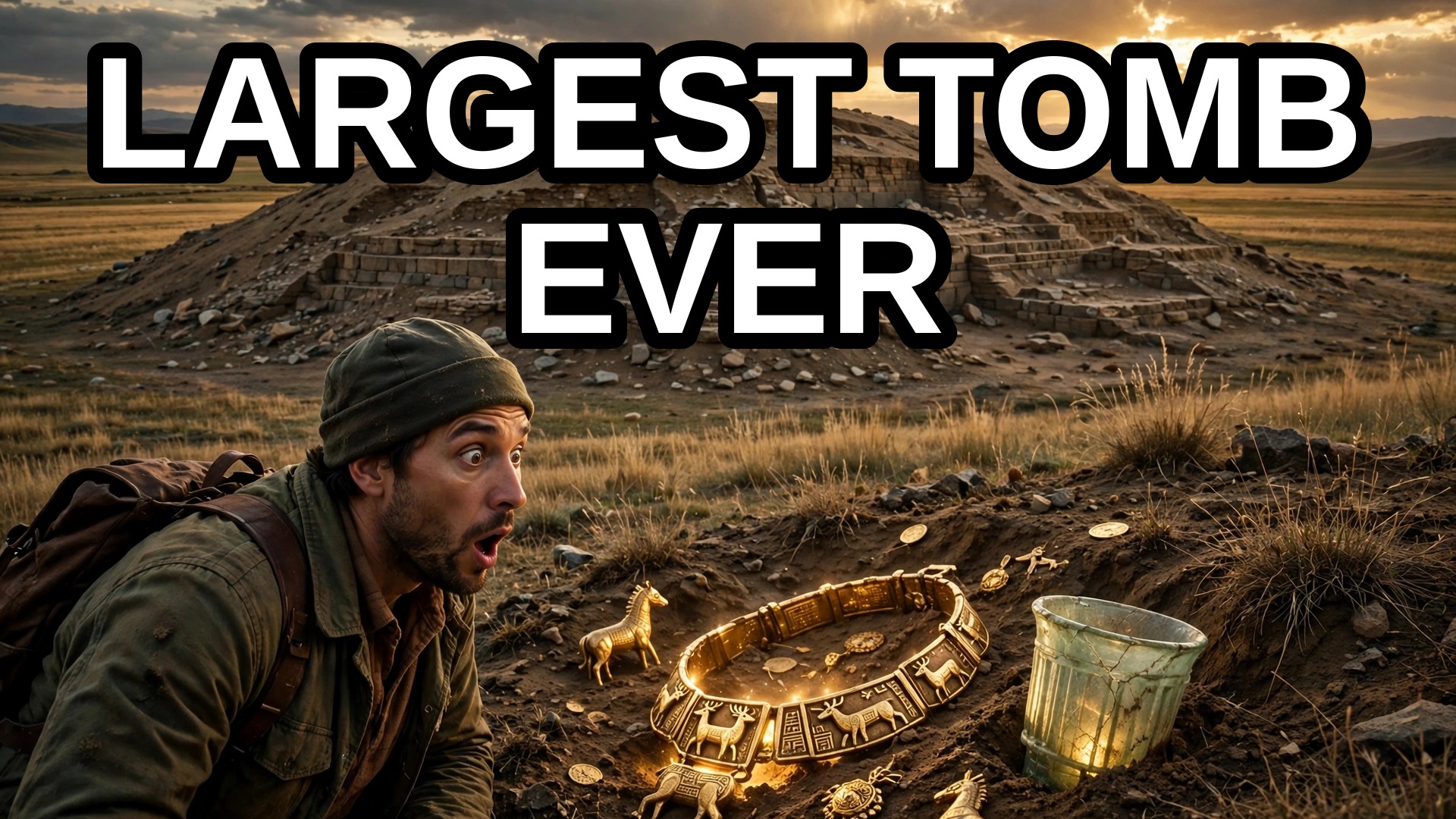
The largest Xiongnu tomb ever found in Mongolia has just been fully excavated — Tomb 160 at Duurlig Nars, in the steppes of eastern Mongolia. It is about 73 metres (240 feet) long, dug 14.5 metres (nearly 50 feet) down through nine layers of stacked stone.
Four years of digging (2023–2026) by a joint team from the National Museum of Korea, the Mongolian Academy of Sciences and the National Museum of Mongolia recovered 413 artifacts from the small central chamber — including a handled glass cup that may be Roman, jade reflecting Han Chinese burial customs, and silver horse ornaments identical to ones found in tombs at Nangnang (Pyongyang) on the Korean Peninsula.
The tomb dates to the late 1st or early 2nd century CE, when Xiongnu power was already fading — yet this elite burial shows the steppe empire still tied into a trade network stretching from Rome to Korea. One honest note: the glass cup's Roman origin is only a possibility so far — scientists will test it chemically before saying so for certain. The tomb owner's identity is still unknown.
The discovery also helped Duurlig Nars win UNESCO World Heritage status in July 2026. If one tomb can hold treasure from three empires, how connected was the ancient world, really? 👇